What Factors Influence Hair Transplant Results?
Two people can have what looks like the same procedure and walk away with noticeably different outcomes. That's not random, and it's not really about luck either — it comes down to a specific set of factors that shape how well a transplant actually turns out. Understanding these tends to matter a lot when researching the best hair transplant in Yelahanka, since it shifts the conversation from "which clinic is cheapest" to "which clinic actually manages these variables well."
Donor Density Sets the Absolute Ceiling
This is the single biggest factor, full stop. However skilled the surgeon, however advanced the technique, the amount and quality of hair available at the back and sides of the scalp determines what's realistically achievable. Two patients with identical hair loss patterns but different donor densities will end up with genuinely different results, regardless of who performs the surgery.
Hair Characteristics Play a Bigger Role Than People Expect
Hair thickness, curl pattern, and color contrast against the scalp all affect how much coverage a given number of grafts appears to provide. Coarser, wavy hair tends to create more visual density per graft than fine, straight hair. This is part of why the exact same graft count can look noticeably different from one patient to the next.
Surgical Technique and Precision
How grafts are extracted, handled, stored, and placed all directly affects survival rates and how natural the final result looks. Careless extraction can damage follicles before they're even implanted. Poor storage between extraction and placement reduces viability. Imprecise angle and depth during implantation can leave hair looking unnaturally uniform or oddly directioned. This is genuinely where surgeon skill matters most.
The Surgeon's Experience With Hairline Design Specifically
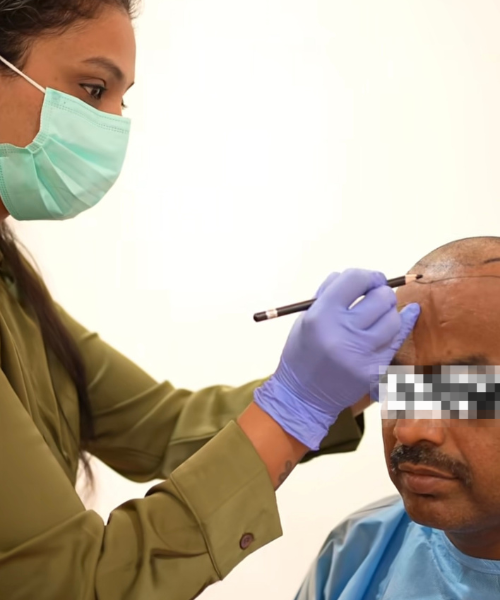
Placing grafts correctly is one skill; designing a hairline that suits someone's face shape, age, and hair characteristics is a somewhat different one. A hair transplant in Yelahanka performed by someone with a strong eye for natural hairline design tends to age better and look more convincing than one focused purely on maximizing density without that same design sensitivity.
Degree and Stage of Hair Loss at the Time of Surgery
Earlier intervention generally has more favorable conditions to work with — more stable donor supply, less advanced miniaturization in the recipient area. Very advanced cases can still be treated well, but usually require more careful planning, sometimes multiple sessions, to achieve a comparable level of satisfaction.
Underlying Scalp Health
Conditions like unmanaged scalp infections, inflammation, or certain types of scarring can interfere with graft survival regardless of how well the surgery itself is performed. This is why a proper pre-surgical assessment matters so much — operating on a scalp that isn't in good condition tends to produce worse results even with excellent technique.
Patient Compliance With Aftercare
This one's easy to underestimate, but it genuinely affects outcomes. Sun exposure too early, harsh hair products, skipped follow-up visits, smoking, poor nutrition during recovery — all of these can measurably affect healing and final density. Two identical surgeries can produce different results purely based on how carefully aftercare instructions were followed afterward.
Overall Health and Lifestyle Factors
Chronic conditions like uncontrolled diabetes, certain medications, smoking, and poor nutrition can all affect healing and graft survival. This is part of why a thorough medical history matters during consultation — it's not just paperwork, it directly informs how realistic the expected outcome should be for that specific patient.
Number of Grafts Relative to the Area Being Covered
Sometimes patients or even clinics miscalculate the graft density needed for a given area, leading to results that look thinner than expected. Getting this ratio right requires careful planning based on the specific area size, degree of loss, and hair characteristics — not a generic formula applied uniformly across every case.
Time Since Surgery
This sounds obvious, but it's worth stating plainly: results genuinely aren't final until close to the twelve-month mark. Comparing outcomes at month four or five, when growth is still filling in, doesn't give an accurate picture of the eventual result. Patience through this stretch is itself a factor in how satisfied someone ends up feeling with the outcome.
Bringing These Factors Together
None of these variables work in isolation — donor density interacts with technique, which interacts with aftercare, which interacts with overall health. A clinic that understands and actively manages all of these factors, rather than focusing narrowly on just the surgical day itself, tends to produce results that are both more predictable and more satisfying long term. Understanding this full picture is really what helps set realistic expectations before ever committing to a plan.
Perfect U Clinics brings dermatology expertise, advanced hair restoration techniques, and genuinely personalised aftercare together under one roof — helping patients go from that first consultation to a result that actually looks like their own hair.
Perfect U - Hair Transplant & Skin Clinic
Address: 2nd Floor, Welcome's Boulevard, 202, 1002/1993, Major Sandeep Unnikrishnan Rd, Yelahanka New Town, Bengaluru, Karnataka 560064
Phone: 090357 77641